
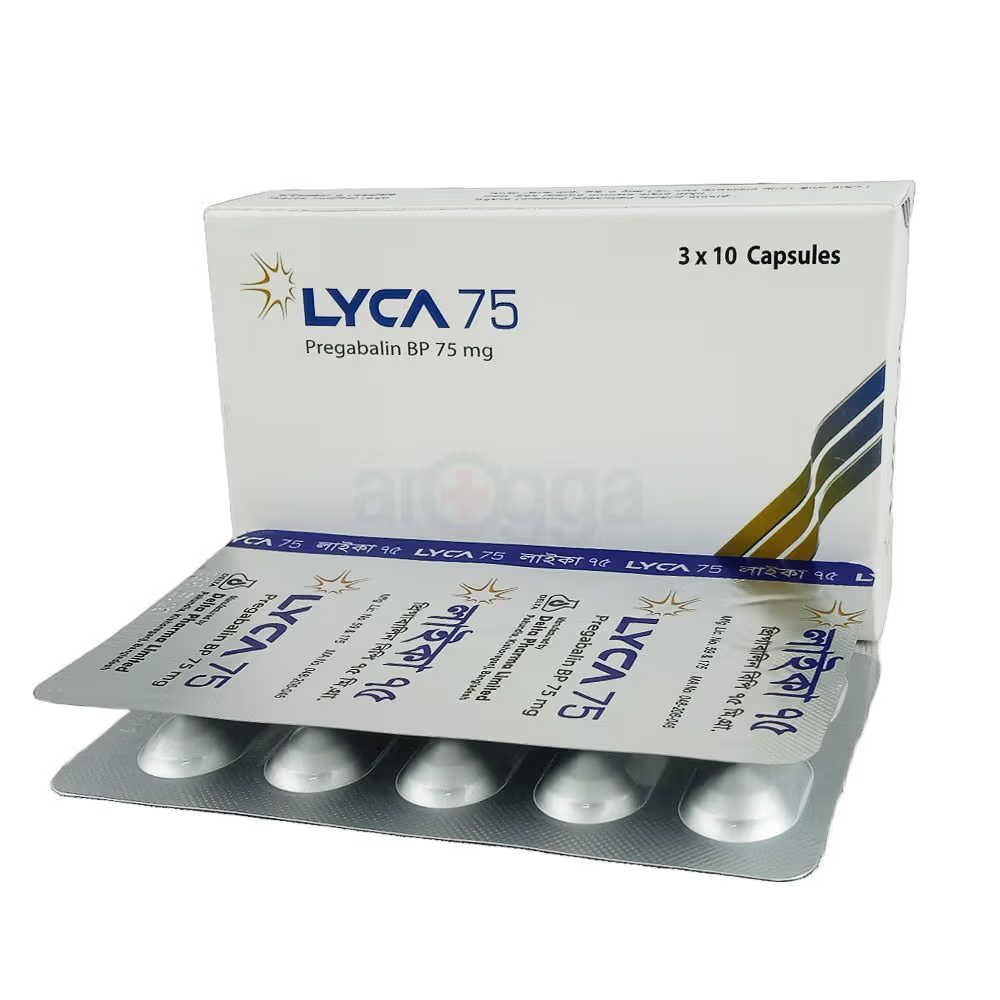
Lyca 75
Capsules
More from Delta Pharma Limited

About this item
Lyca 75 is a medicine used to relieve pain caused by nerve damage (neuropathic pain) due to diabetes, shingles (herpes zoster infection), spinal cord injury, or other conditions. It is also used to treat widespread muscle pain and stiffness in people with fibromyalgia. Lyca 75 belongs to the anti-epileptic group of medicines and can be used to treat certain types of seizures (fits) in combination with other medicines. It may also be prescribed to treat the symptoms of excessive anxiety in generalized anxiety disorder if other medicines are not suitable. You can take Lyca 75 with or without food, but it is important to take this medicine at the same time each day to get the most benefit. The exact dose and duration of treatment will depend on your condition and how you respond to it. Your doctor will probably start this medicine at a low dose and increase it gradually. It may take a few weeks for the medicine to work properly. Follow your doctor's instructions and continue taking it regularly until your doctor advises you to stop. Do not miss any dose, otherwise, your condition may worsen. The side effects of this medicine are usually mild and go away by themselves. The most common ones are feeling sleepy or dizzy, dryness in the mouth, blurred vision, weight gain, edema (swelling over the whole body), and difficulty in concentrating. Most side effects are not serious and do not need medical attention. Talk to your doctor about potential side effects and ways in which you might prevent or cope with them. Before taking the medicine you should tell your doctor if you are pregnant, breastfeeding or planning to become pregnant. Be careful while driving as sleepiness, dizziness, and blurring of vision may be seen as side effects. You should avoid drinking alcohol along with this medicine as it may lead to excessive sleepiness and dizziness.
Medicine Overview
Indication:
Anxiety, Fibromyalgia, Post herpetic Neuralgia, Partial seizures, Pain from diabetic neuropathy, Neuropathic pain associated with spinal cord injury
Administration:
May be taken with or without food.
Adult Dose:
Oral Neuropathic pain, Postherpetic Neuralgia Adult: Initially, 150 mg/day, may increase to 300 mg/day after 3-7 days. Max: 600 mg/day after a 7-day interval. All doses to be given in 2 or 3 divided doses. Diabetic Peripheral Neuropathic Pain Initial: 50 mg PO q8hr Maintenance: May increase to 100 mg PO q8hr within 1 week, as needed; not to exceed 300 mg/day Adjunct in partial seizures Adult: Initially, 150 mg/day, may increase to 300 mg/day after a wk. Max: 600 mg/day. All doses to be given in 2 or 3 divided doses. Fibromyalgia Adult: Initially, 150 mg/day, may increase to 300 mg/day after a wk. Max: 450 mg/day, if needed. All doses to be given in 2 or 3 divided doses.
Child Dose:
Safety and efficacy not established
Renal Dose:
Renal impairment: Haemodialysis: 25-100 mg immediately after each 4-hr haemodialysis session. CrCl (ml/min) Dosage Recommendation 30 to <60 75 mg/day. Max: 300 mg/day. All doses to be given in 2 or 3 divided doses. 15 to <30 Initially, 25-50 mg/day. Max: 150 mg/day. All doses to be given as a single dose or in 2 divided doses. <15 Initially, 25 mg/day. Max: 75 mg/day. All doses to be given as a single dose.
Contraindication:
Hypersensitivity. Pregnancy, lactation. Driving or working with machines, or do other dangerous activities.
Mode of Action:
Pregabalin is an analog of the neurotransmitter GABA. It binds potently to the alpha2-delta subunit resulting in modulation of Ca channels and reduction in the release of several neurotransmitters, including glutamate, norepinephrine, serotonin, dopamine, calcitonin gene-related peptide and substance P.
Uses
Neuropathic pain
Epilepsy/Seizures
Fibromyalgia
Side Effects
Common
Blurred vision
Difficulty in paying attention
Dizziness
Dryness in mouth
Edema (swelling)
Sleepiness
Weight gain
Precautions
Abrupt or rapid discontinuation of Pregabalin may produce some symptoms including insomnia, nausea, headache and diarrhoea. So Pregabalin should be tapered gradually over a minimum of 1 week rather than discontinued abruptly. Pregabalin treatment may associate with creatine kinase elevations. It should be discontinued if myopathy is diagnosed or suspected or if markedly elevated creatine kinase levels occur. Discontinue treatment if patients develop severe angioedema. Regular vision check is recommended. May decrease platelet count and prolong PR interval. Patient w/ history of angioedema episodes, severe CV disease, renal impairment. Pregnancy and lactation. Patient Counselling May impair ability to drive, operate machinery or engage in hazardous activities. Monitoring Parameters Monitor visual disturbances. Closely observe for clinical worsening, suicidality and unusual changes in behaviour. Suicidal thoughts or behaviors Antiepileptic drugs increase risk of suicidal thoughts or behavior in patients taking these drugs for any indication; monitor for emergence or worsening of depression, suicidal thoughts or behavior, and/or any unusual changes in mood or behavior Inform patients, their caregivers, and families of the increase the risk of suicidal thoughts and behavior; advise to be alert for the emergence or worsening of signs and symptoms Angioedema Angioedema of the face, extremities, lips, tongue, glottis, and larynx has been reported during initial and chronic treatment, including reports of life-threatening angioedema with respiratory compromise requiring emergency intervention If laryngeal stridor or angioedema of the face, tongue, or glottis occurs, discontinue therapy and institute appropriate therapy immediately Coadministration of ACE inhibitors or mTOR (mammalian target of rapamycin) inhibitors (eg, temsirolimus, sirolimus, everolimus), or previous history of angioedema may increase risk Lactation: Unknown if excreted in milk; not recommended